


What does it take to turn AI ambition into systems that deliver value—and keep delivering it?
That question brought engineering, business and governance practitioners together at Ham Yard Hotel, London, on 21 October for Safe Intelligence’s first AI Strategy & Practice Conference.
We created the event to make room for the conversations that sit between technical capability and organisational delivery: how to choose where AI belongs, recognise meaningful progress, get systems into production and decide what oversight they need.
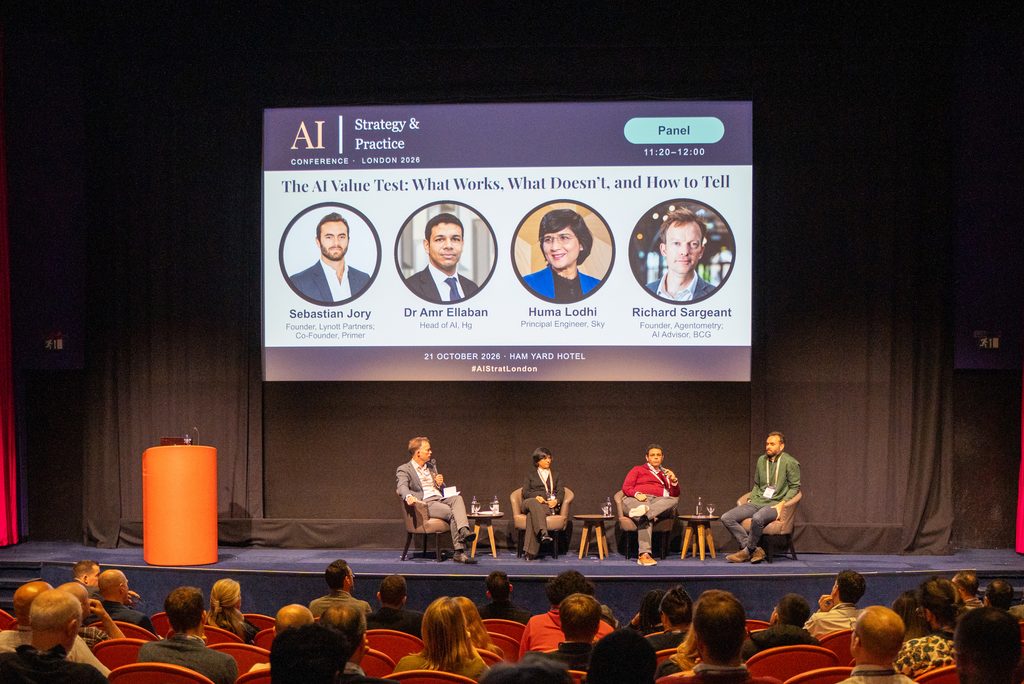
Engineering, business and governance practitioners came together at Ham Yard Hotel for AI Strategy & Practice Conference on 21 October 2026.
Starting with value
Following a welcome from Safe Intelligence’s Alessio Lomuscio and Steven Willmott, Stuart McMeechan of OpenAI joined Steven for the opening fireside chat, The Work Behind AI That Works.
The conversation set the focus for the day: the work involved in moving from what AI can do to what an organisation can successfully put into use.
One of the key lessons from Stuart was that there is a clear distinction between projects that improve and accelerate existing processes within an organisation and those that explore radical changes in an industry through AI. Both are highly valuable, but they require different approaches.
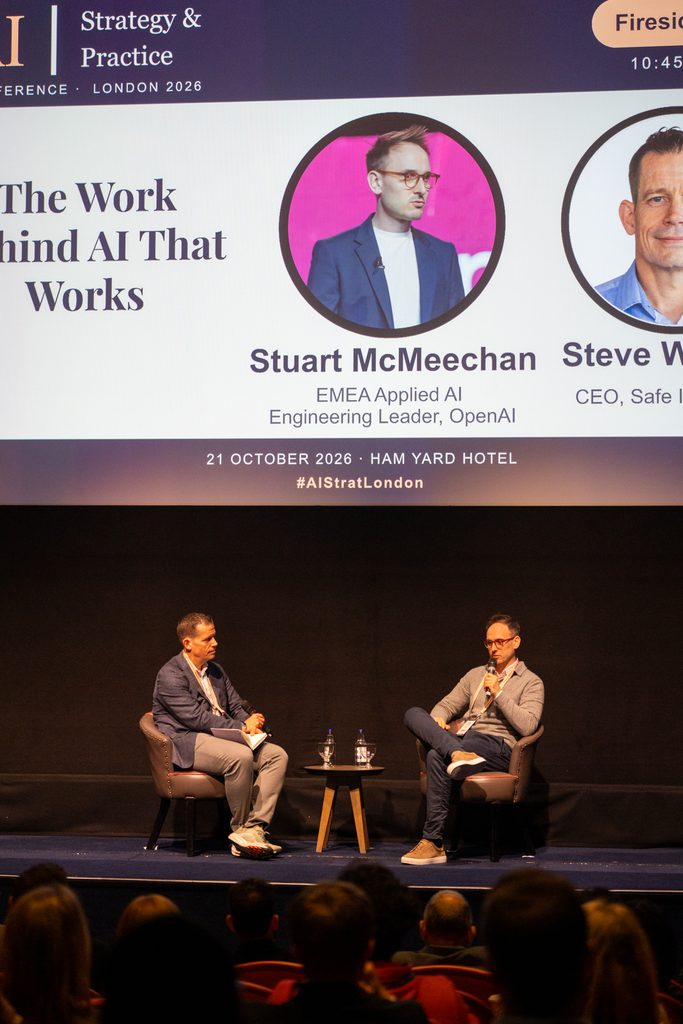
Stuart McMeechan of OpenAI joins Steven Willmott of Safe Intelligence for “The Work Behind AI That Works”.
The morning panel, The AI Value Test: What Works, What Doesn’t, and How to Tell, brought together Huma Lodhi of Sky, Dr Amr Ellabban of Hg and Sebastian Jory of Lynott Partners and Primer, chaired by Richard Sargeant of Agentometry and BCG.
It put a central deployment question on the agenda: how do you establish whether an AI application is producing a benefit worth pursuing?
One of the key insights from the panel was: “If you have to explain how to use the new AI-powered process within your organisation, you’re probably doing it wrong.” Specifically, this means that either there hasn’t been enough consultation to understand existing teams’ real workflows or, where there is a radical shift in workflow, the new steps don’t fit reality.
Getting AI into production—and keeping it working
The afternoon turned to the foundations and continuing work of deployment.
In Rethinking the Stack: How AI Agents Change the Foundations of IT, Samuel Colvin of Pydantic joined Steven Willmott for a fireside conversation on the implications of agents for the systems organisations build and operate.
Samuel doubled down on one of the key themes of the day: don’t sideline your internal experts. It’s tempting to think that because AI is new and complex, solutions built in-house by domain teams might not be “good enough”. But often, it is that very domain knowledge that is the most critical component of success.
Mark Leisten of Bank of America, Rafael Pierre of Citi and Alexander Vakhitov of Slamcore then joined Alessio Lomuscio of Safe Intelligence for Getting AI into Production—and Keeping It Working.
The session brought conversational AI, financial services and perception systems into the same discussion, with attention on the responsibilities that continue after a system goes live.
There was a clear recommendation on how to go live: use an onion-layered approach to launches. Build up from the internal team developing the system to an internal tester group, then to a limited group of outside users, followed by a slow rollout. Especially with AI, user reactions can be very varied and unexpected.
Making the calls that deployment demands
The final part of the programme focused on accountability, integrity and responsibility.
Luke Vilain of PwC delivered the keynote, Governing Agentic AI at Scale, bringing governance into the discussion of how organisations prepare for and manage agentic systems.
The talk gave us a peek into the future of IT governance. One of the key takeaways was that “human in the loop” clearly won’t work at the scales we are dealing with. More and more levels of triage and analysis are required; otherwise, systems will be either unusable or unsafe.
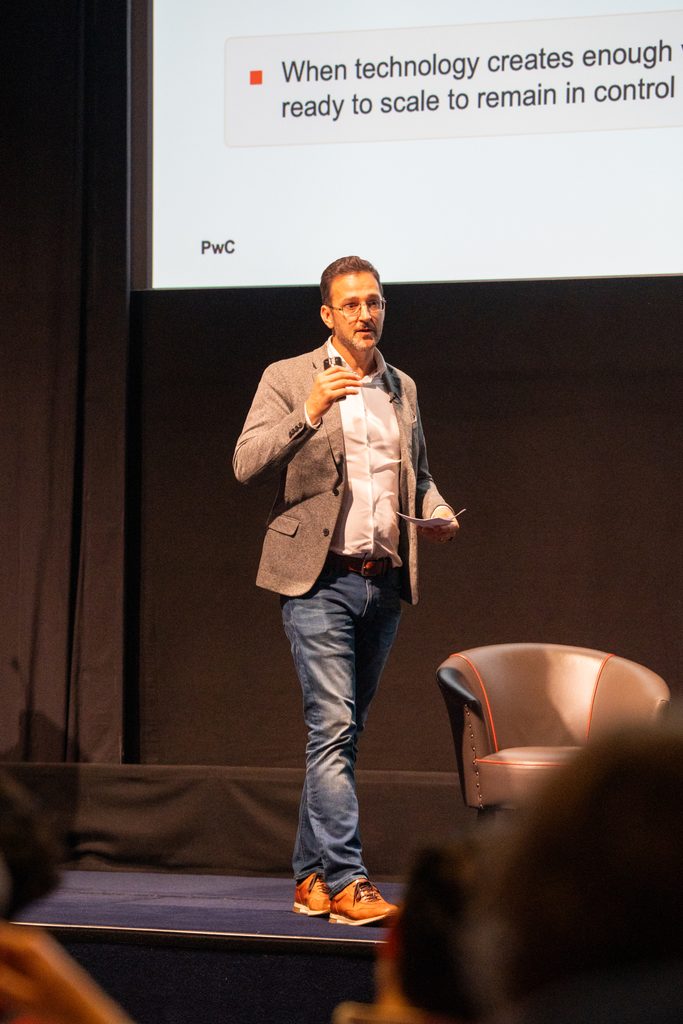
Luke Vilain of PwC delivers the keynote, “Governing Agentic AI at Scale”.
In the double fireside chat, From Ambition to Action: Perspectives on Making the Right Calls for AI, Mira Pijselman of Ankura and Richard Masters, formerly VP of Data & AI at Virgin Atlantic, joined host Jon Hammant of Orbital.
The closing panel, How Safe Is Safe Enough? Making the Hard Calls on AI Deployment, brought together Jovita Tam, Phoenix Williams of Lloyds Banking Group and Oxana Samko of HSBC, chaired by Alessio Lomuscio.
These sessions placed deployment decisions alongside the questions of evidence, responsibility and acceptable risk that organisations need to address.
Metrics and evals were a key part of discussions all day, but the panel also produced some key thoughts on counterbalancing the mechanical view of responsibility: think through, in a logical, human way, what can and will go wrong, and how we will react when it does.
Ankura’s Richard Masters also highlighted how important it is to think of the human users of the AI systems we build. We may be certain that AI fuel-usage predictions are correct, but a veteran airline pilot will have her own views. Convergence and collaboration are key.
What stayed with the people in the room
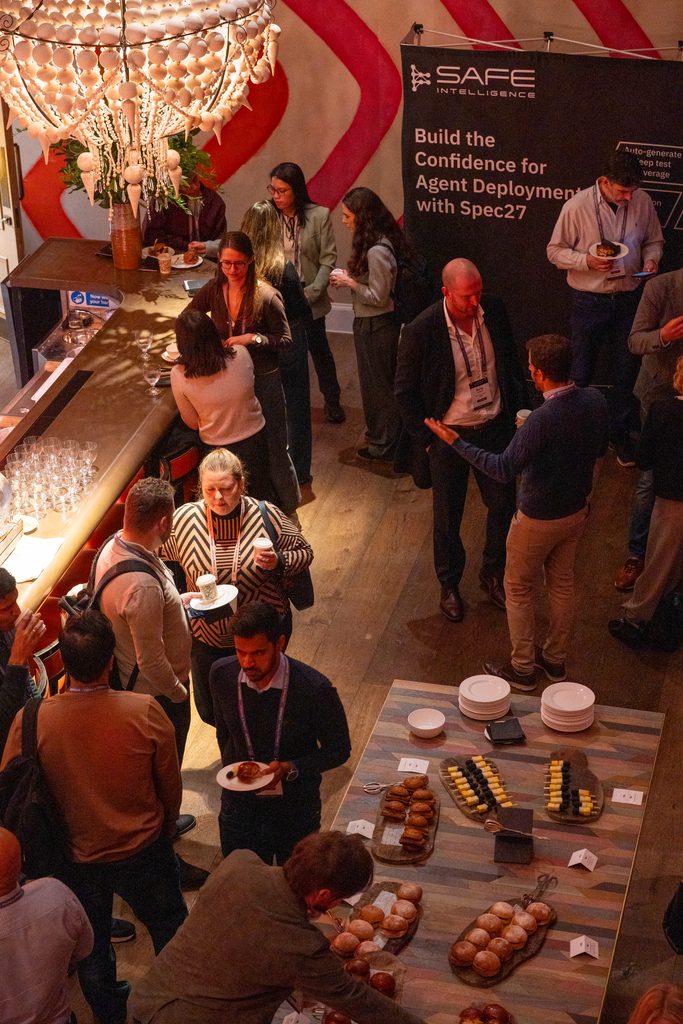
Conversations continued between sessions as attendees shared experiences and connected over refreshments at Ham Yard Hotel.
Questions from the audience and conversations between sessions were an important part of why we brought everyone together. We’re collecting reflections from attendees on the ideas they found useful, the assumptions they questioned and what they plan to take back to their teams.
- Evals and testing are fundamental to successful deployments. They help teams understand what good looks like, support tuning and improvement, and detect when systems are drifting out of the required performance envelope.
- Expert operational and business knowledge in your organisation is essential to effective rollouts. AI creates new opportunities, but it’s often the knowledgeable people in your organisation who are needed to establish how it should behave and how to tell whether it is a true replacement for an existing process. Empowering these individuals to build and shape the AI is a key driver of success.
- We need to think at scale. Current approaches to rollouts, deployments and governance assume business as usual with respect to the number of projects: 50 a year, 100 a year, 150 a year. AI and agents make it likely that the number of rollouts will rise into the thousands and that systems will be adjusted many times after rollout. All of our processes need to change to accommodate this!
Keeping the conversation going
The conference was built around a conviction that guides our work at Safe Intelligence: making progress with AI requires ways to test behaviour, assess evidence and maintain confidence as systems change.
Bringing engineering, business and governance perspectives into the same room helps make those questions more concrete. A deployment decision can involve all three, and each needs enough understanding of the others to move forward.
Thank you to every speaker, panel chair, host and attendee who contributed their experience and questions, and to our sponsors and the Ham Yard Hotel team for supporting the day.
A special thank you to our sponsors, Orbital, Pydantic and Spec27, for helping make the conference possible.
We’d like to keep hearing what stayed with you. What will you do differently after AI Strategy & Practice? Share your reflections with us on LinkedIn using #AIStratLondon.
Photos captured by Ji-Sian Loong (Instagram: @ji.loong.photography).