
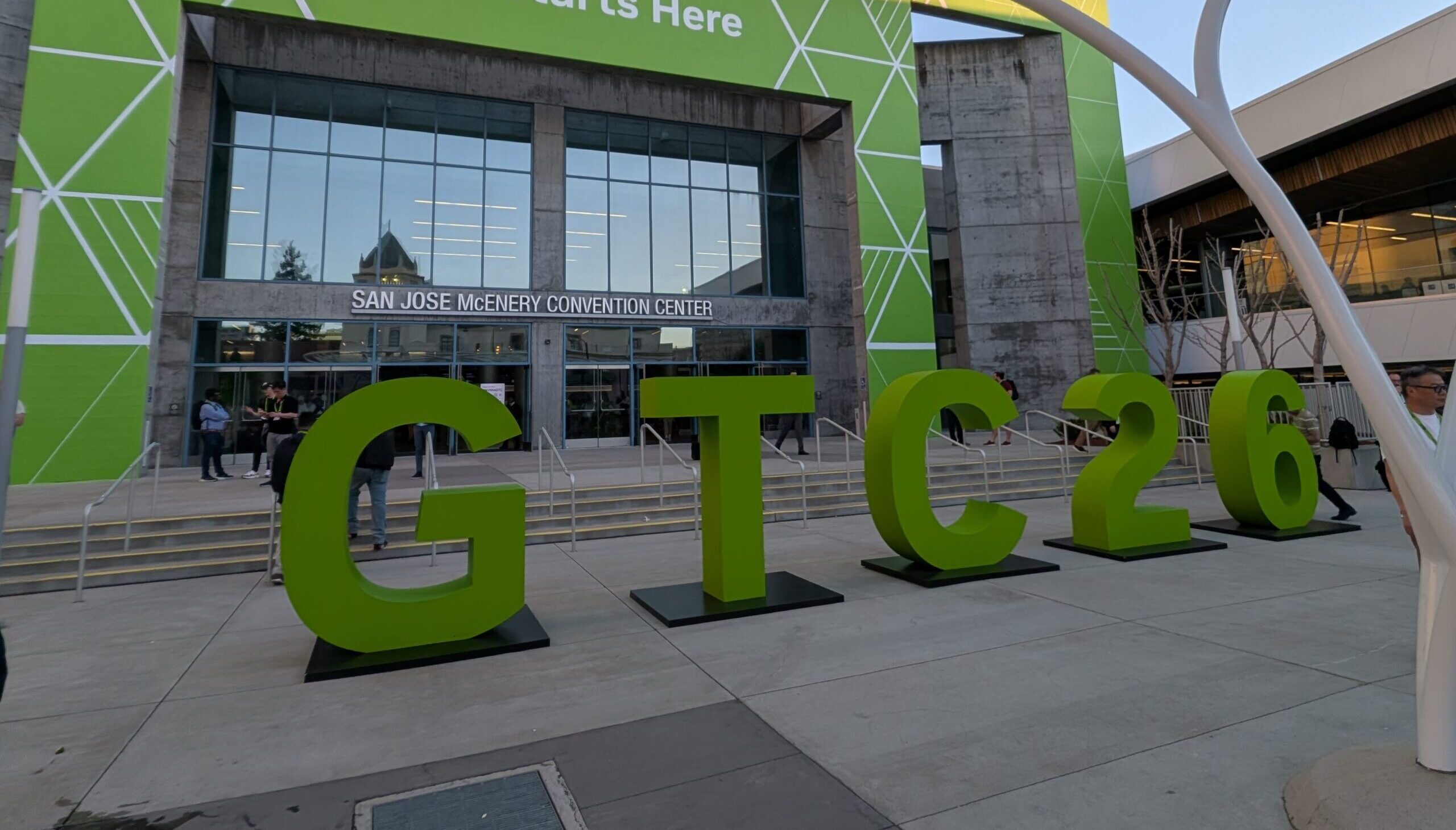

From March 16–19, 2026, the global AI community gathered in San Jose for NVIDIA GTC 2026. Our CTO, Alessio Lomuscio, attended and came back with one clear takeaway:
AI is scaling fast, and validation is becoming the bottleneck for deployment.
A Maturing AI Ecosystem
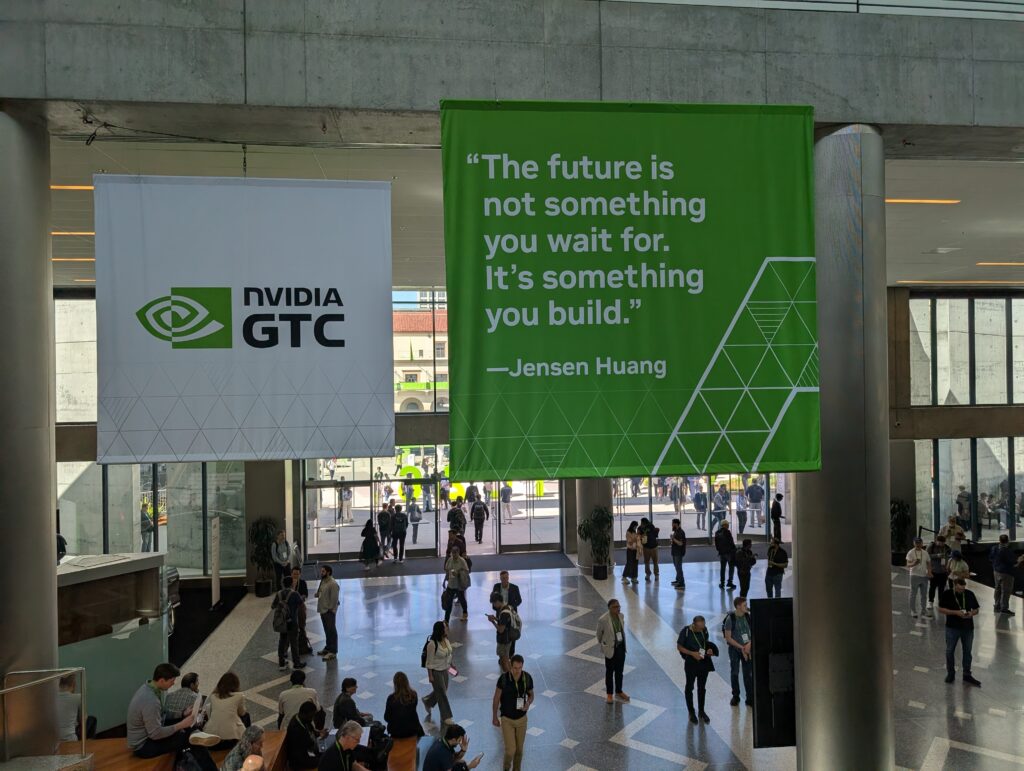
One of the most striking aspects of this year’s conference was the maturity of the ecosystem on display. Rather than isolated advances, GTC presented a coherent stack spanning hardware, infrastructure, libraries, software, and applications. What stood out was not only the technical quality of the individual components, but how clearly they now fit together as part of a broader deployment pipeline.
Equally notable was the level of participation from the wider community. Researchers, engineers, startups, and established companies were all visible across the event, reinforcing the sense that AI is progressing through coordinated advances across the stack rather than through isolated breakthroughs.

From Models to Systems in the Physical World
Many of the most important demonstrations focused on systems operating in the physical world. Autonomous driving and robotics stood out in particular, not only because of the ambition on display, but because both domains make the limitations of current validation methods immediately visible.
In autonomous driving, one of the most interesting developments was the release of Alpamayo 1.5, a significant update to NVIDIA’s reasoning model for autonomous vehicles led by Marco Pavone. The significance was not just the actual release, which is remarkable in itself, but the broader ecosystem that it impacts, including simulation, reasoning, deployment, and system integration for safety-critical settings. This was also visible in the strong interest around the autonomous vehicle programme at the conference.
Robotics raised a similar set of questions. From humanoid systems to warehouse and industrial applications, the event made clear that AI is moving beyond digital tasks into embodied systems that must act under uncertainty.

Validation and Trust as Central Concerns
Across both talks and side conversations, validation, reliability, and trust repeatedly surfaced as practical concerns. This was not always the headline topic, but it was present throughout the event in discussions about certification, deployment, regressions, and the gap between a successful demonstration and dependable use.
A particularly relevant example was NVIDIA Halos for autonomous vehicle safety. Alessio highlighted Dr. Riccardo Mariani’s presentation as one of the standout moments of the conference, precisely because it addressed safety and assurance at the system level.
What also emerged clearly from the event is that testing remains the dominant way teams handle safety and reliability today. At the same time, there was visible interest in moving toward more systematic and principled approaches.
Startups and Agentic AI
Another notable aspect of GTC was the density of technically ambitious startups visible through the Inception ecosystem. One example worth mentioning is Generative Bionics, associated with Alessio Del Bue, and its ambitious work on advanced robotics and humanoids.
A further theme running through the event was agentic AI. Interest around NemoClaw made clear that agents are moving closer to practical deployment. This matters because the validation problem is not limited to autonomous vehicles or robotics. As agentic systems take on more complex roles, the same question returns: how do we establish that these systems will behave correctly and reliably in realistic settings?
The Challenge Ahead
The strongest takeaway from GTC 2026 is that validation is becoming the main bottleneck.
As AI systems expand into autonomous driving, robotics, and agentic workflows, they are expected to operate reliably across a wide range of conditions. However, the methods available today often struggle to provide guarantees at the level these applications require.
At Safe Intelligence, this challenge lies at the core of our work. As AI systems continue to scale in complexity and responsibility, rigorous validation will be essential to making them dependable in practice.
Related news & resources



AI Engineer Paris 2025 Recap – Through the Lens of Trustworthy AI
October 24, 2025